Are Omega Pixels Safe After the Shopify Checkout Hijacking? Yes, Here's Why


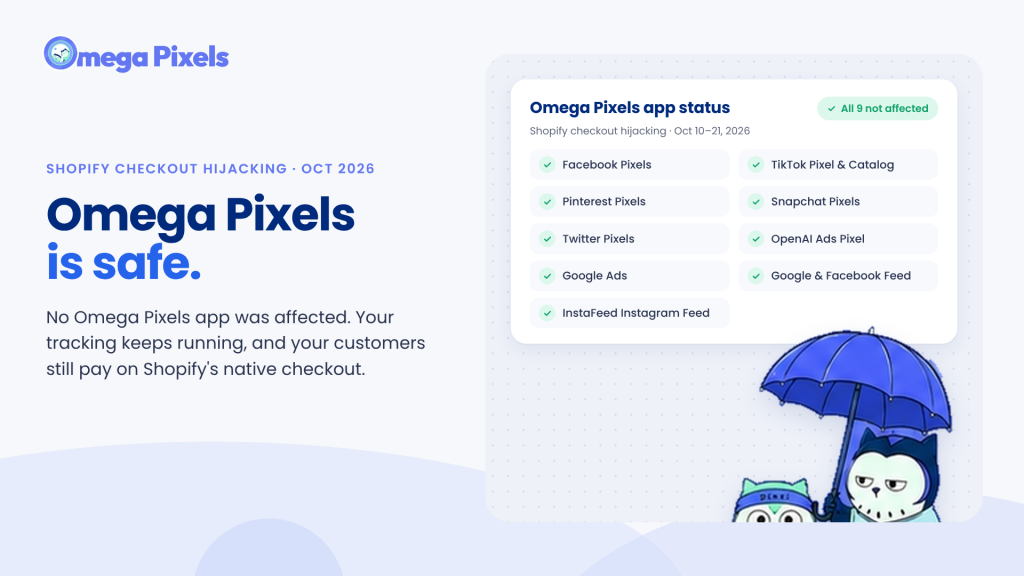
Yes. No Omega Pixels app was affected by the October 2026 Shopify checkout hijacking. Omega Pixels apps track what happens on your store; they don't run custom checkout JavaScript that could change where the Checkout button goes. Your customers always pay on Shopify's native checkout, and every piece of data our apps output is validated before it reaches your store, so no harmful JavaScript can be initialized.
That covers the whole Omega Pixels family: Omega Facebook Pixels, Omega TikTok Pixel & Catalog, Omega Pinterest Pixels, Omega Snapchat Pixels, Omega Twitter Pixels, Omega OpenAI Ads Pixel, Omega Google Ads, Omega Google & Facebook Feed and Omega Instagram Feed.
Why merchants are asking about tracking apps first
Tracking pixels are one of the few app types that are present at checkout. They need to see when a shopper starts checkout and completes a purchase, so your ad platforms can count the conversion. When news broke that apps were used to hijack checkout, it was reasonable to look at pixels first.
What the Shopify checkout hijacking was
Between October 10 and 21, 2026, attackers compromised a handful of third-party apps and used them to send shoppers from the Checkout button to a fake checkout page on a look-alike .top domain. The page captured card details, then forwarded the shopper to the real checkout so the order looked normal. The developers of Hulk Product Options, Selleasy and Swym Wishlist Plus confirmed incidents; none of them are tracking apps.
Shopify's own checkout was not breached. The malicious code came through those apps' own systems, usually hidden in data the app sent to the storefront, such as a custom JavaScript setting.
Why Omega Pixels can't be used to hijack your checkout
A pixel and a hijack script do opposite jobs. A pixel listens: it notices that a purchase happened and reports it. A hijack script acts: it intercepts the shopper and sends them somewhere else. Omega Pixels is built only to listen.
| What a hijack needs | How Omega Pixels works |
|---|---|
| Code that can redirect the Checkout click | Omega Pixels doesn't run custom checkout JavaScript. It records checkout events; it never decides where the shopper goes. |
| A way to slip malicious code onto the storefront through app data | Every piece of data our apps output is validated before it reaches your store, so no harmful JavaScript can be initialized. |
| A shopper paying somewhere other than Shopify | Your customers always pay on Shopify's native checkout. |
This is the same principle Shopify asked every app developer to follow on October 20, 2026: treat all rendered data as untrusted.
What Omega Pixels sends, and what it never touches
Omega Pixels sends conversion events, such as page views, add to cart, checkout started and purchase, to the ad platforms you connect, through the browser pixel and server-side Conversions APIs.
What it never does:
- It never collects card details. Payment happens entirely on Shopify's checkout; card numbers never pass through Omega Pixels.
- It never sells or shares your data. We collect only what tracking needs and never sell or share merchant data with third parties.
- It never changes your checkout. No redirects, no extra payment steps, no custom checkout scripts.
Omega Pixels is part of the OmegaTheme ecosystem, which runs on SOC 2 Type II security controls. According to the OmegaTheme Trust Center, that includes AES-256 encryption at rest, TLS 1.3 in transit, role-based access, continuous vulnerability monitoring and penetration testing.
Is Omega Pixels affected by the PHP or Node.js vulnerabilities?
No. Two separate server-side issues were disclosed on October 21, 2026, and neither has been linked to the checkout hijacking:
- PHP "PHP2Shell" (CVE-2026-109618 and CVE-2026-109619): our systems have no exposure.
- Node.js (CVE-2026-111497 and 9 other issues): every Omega Pixels service running Node.js was patched on October 22, 2026, one day after the fixes were released.
This matters for server-side tracking in particular: Conversions API events run through our servers, so keeping those servers patched is part of keeping your data safe.
How to spot a checkout hijack in your tracking data
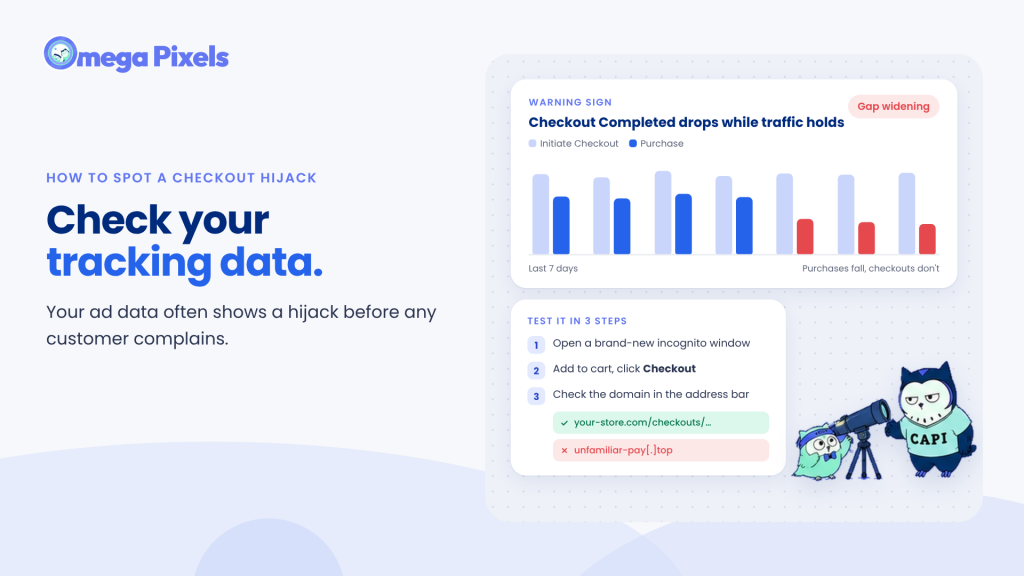
If you run ads, your tracking data is often the first place a hijack shows up, before any customer complains. Here's what to look for and what to do.
Warning signs in your numbers
- Checkout Completed drops while traffic holds. Visits and add-to-carts look normal, but completed checkouts fall.
- Initiate Checkout and Purchase drift apart in Meta, TikTok or Google Ads more than usual.
- Customers mention an extra payment step or a payment error before paying again.
Any of these is a reason to test your checkout today.
How to check your Shopify checkout:
- Use a brand-new incognito window, not the browser you use every day. The malicious script only ran once per session, so a used browser can hide it.
- Add a product to your cart and click Checkout.
- Check the address bar. A real checkout stays on your store's domain, such as
your-store.com/checkouts/…. An unfamiliar domain, especially one ending in.top, means your store is affected.
If you find a redirect:
- Go to Online Store > Themes > Customize > App embeds and switch off apps you don't recognize or that accept custom JavaScript.
- Turn apps off one at a time and re-test in a new incognito window until the redirect stops. That's the app responsible.
- If customers entered card details on the fake page, email them right away and recommend they ask their bank to lock their card.
- Report it to Shopify Support and the app's developer, with screenshots and the fake address.
- Change your Shopify password and app account passwords, turn on two-step authentication, and remove apps you no longer use.
Omega Pixels and the Shopify checkout hijacking: FAQ
Is the Omega Facebook Pixel safe to keep on my store?
Yes. Omega Facebook Pixels, and every other Omega Pixels app, was not affected. There's nothing you need to change or reinstall.
My pixel runs on checkout. Couldn't it be used to redirect shoppers?
No. Omega Pixels records checkout events but doesn't run custom checkout JavaScript that could change where a shopper goes, and all the data our apps output is validated before it reaches your store.
Does Omega Pixels see my customers' card details?
No. Payment happens entirely on Shopify's native checkout. Omega Pixels sends conversion events to your ad platforms, never card data.
Is server-side tracking (Conversions API) affected?
No. Our servers have no exposure to the October 21 PHP vulnerability, and all Node.js services were patched on October 22, 2026.
My purchase conversions dropped this month. Should I worry?
Run the incognito checkout test above. If checkout stays on your own domain, the drop has another cause, and our support team can help you check your tracking setup.
Keep tracking with confidence
Accurate tracking depends on trust: in your data, in your checkout, and in the apps that sit between them. We'll keep monitoring this incident and applying the new security requirements Shopify announced on October 20, 2026, and we'll update this post if anything changes.
Questions about your store or your tracking setup? Reach our team from inside any Omega Pixels app, through the contact page, or in the help center. Our full security commitments are in the OmegaTheme Trust Center.
The Two Owls team
- 1 Why merchants are asking about tracking apps first
- 2 Why Omega Pixels can’t be used to hijack your checkout
- 3 What Omega Pixels sends, and what it never touches
- 4 Is Omega Pixels affected by the PHP or Node.js vulnerabilities?
- 5 How to spot a checkout hijack in your tracking data
- 6 Omega Pixels and the Shopify checkout hijacking: FAQ
- 6.1 Is the Omega Facebook Pixel safe to keep on my store?
- 6.2 My pixel runs on checkout. Couldn’t it be used to redirect shoppers?
- 6.3 Does Omega Pixels see my customers’ card details?
- 6.4 Is server-side tracking (Conversions API) affected?
- 6.5 My purchase conversions dropped this month. Should I worry?
- 7 Keep tracking with confidence
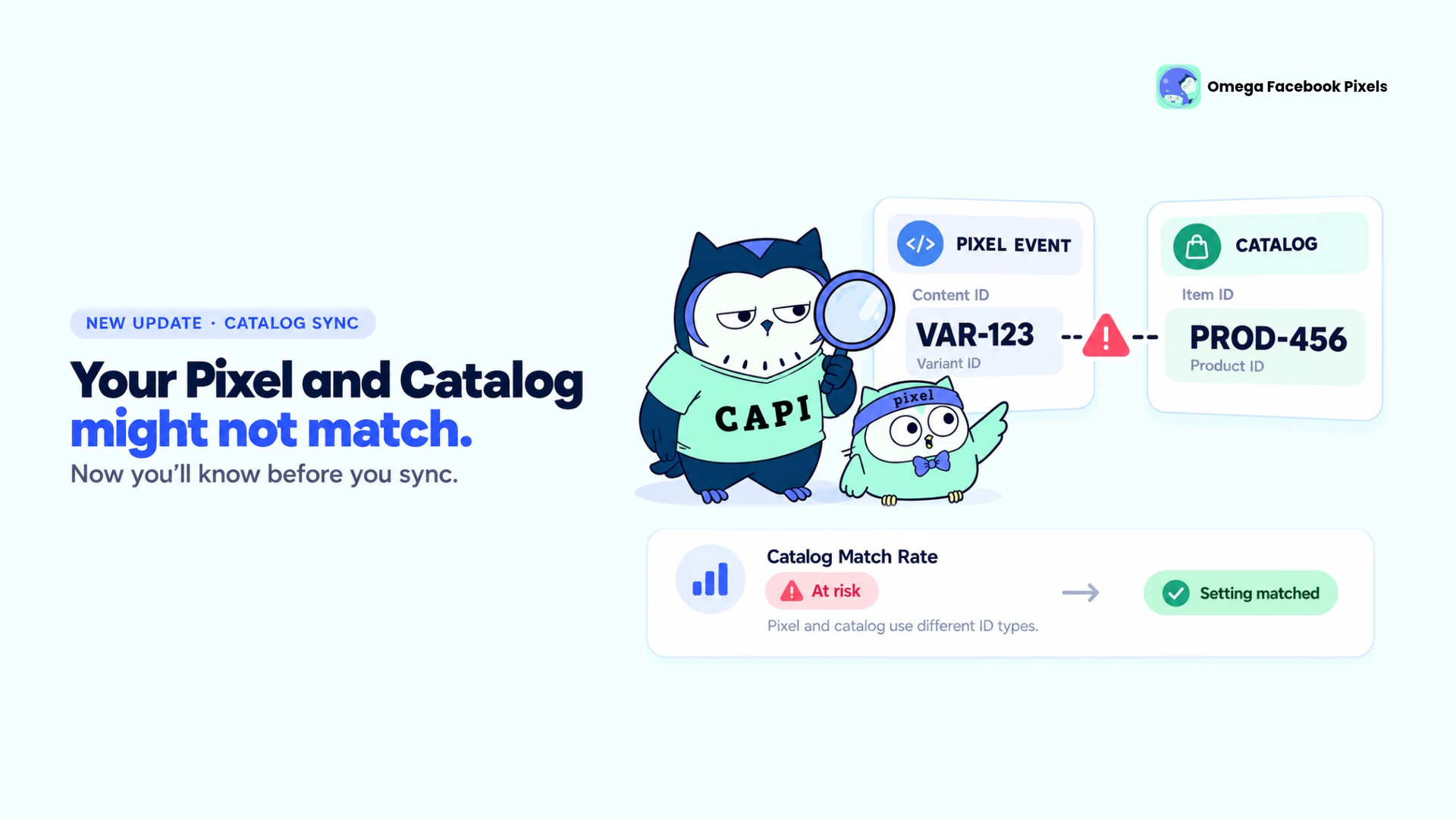
Omega Facebook Pixels Catches Catalog and Pixel Mismatches Before Your Match Rate Drops
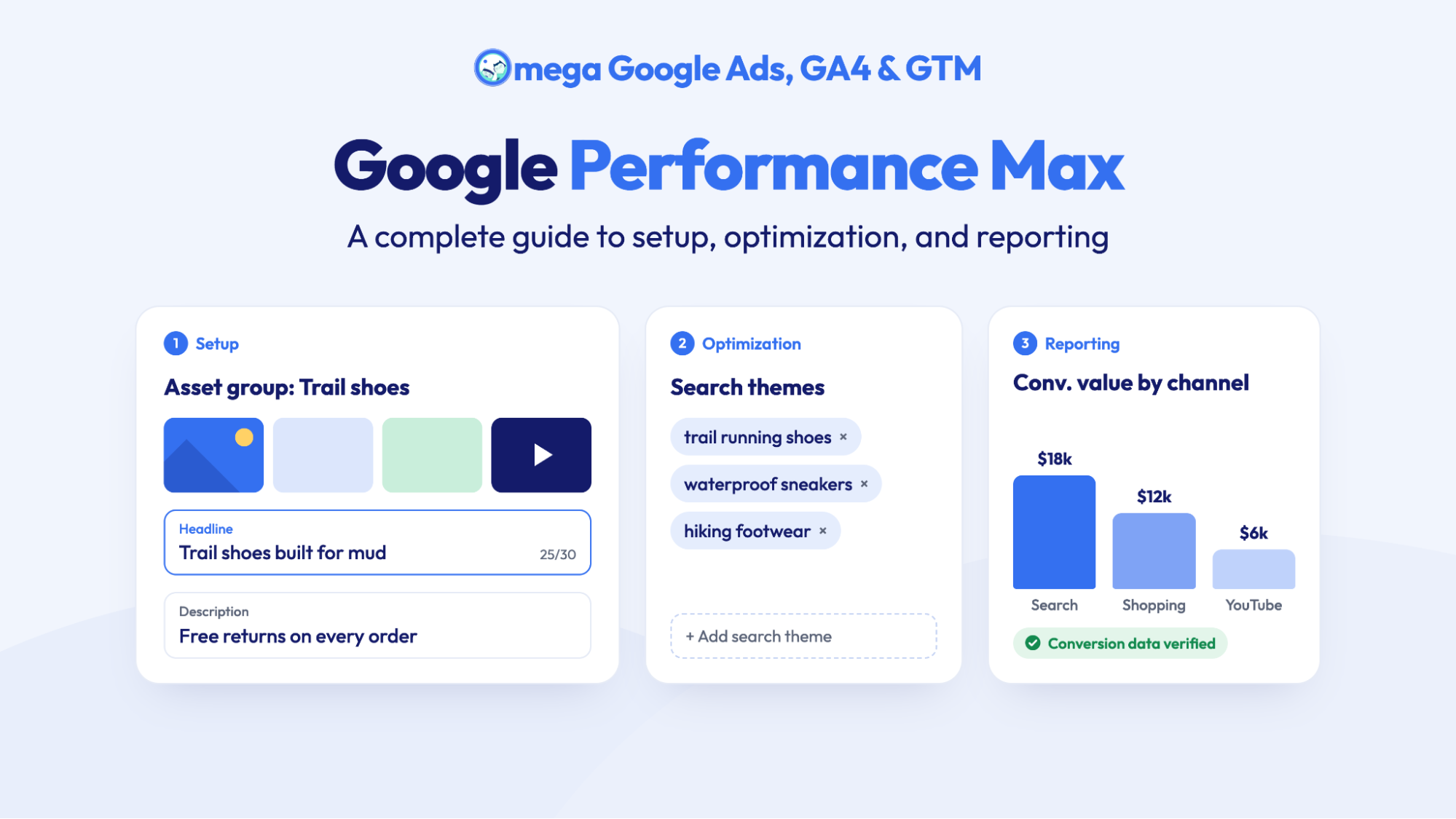
Google Performance Max: A complete guide to setup, optimization, and reporting
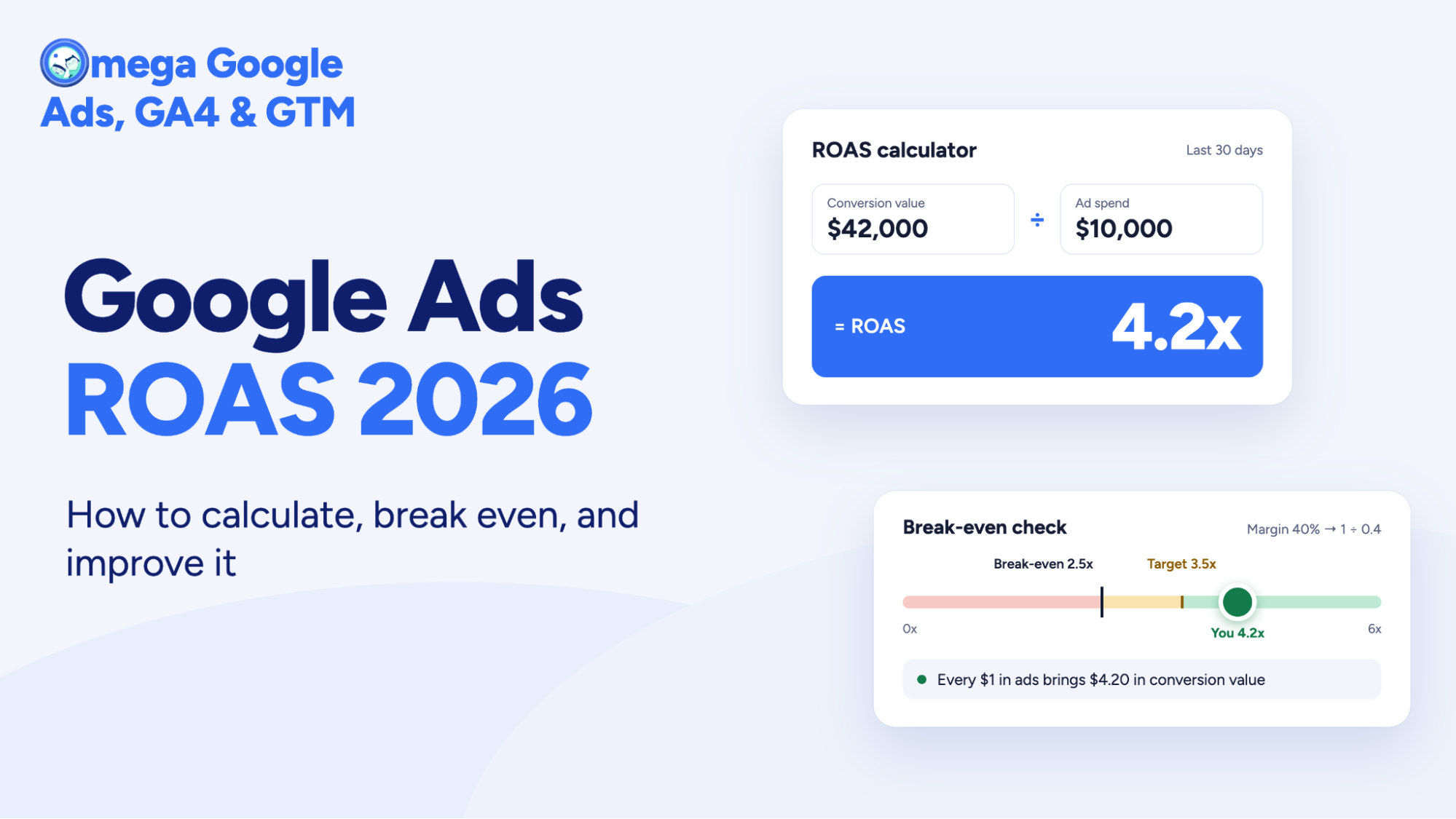
Google Ads ROAS 2026: How to calculate, break even, and improve it
Omega Facebook Pixels Catches Catalog and Pixel Mismatches Before Your Match Rate Drops
Google Performance Max: A complete guide to setup, optimization, and reporting
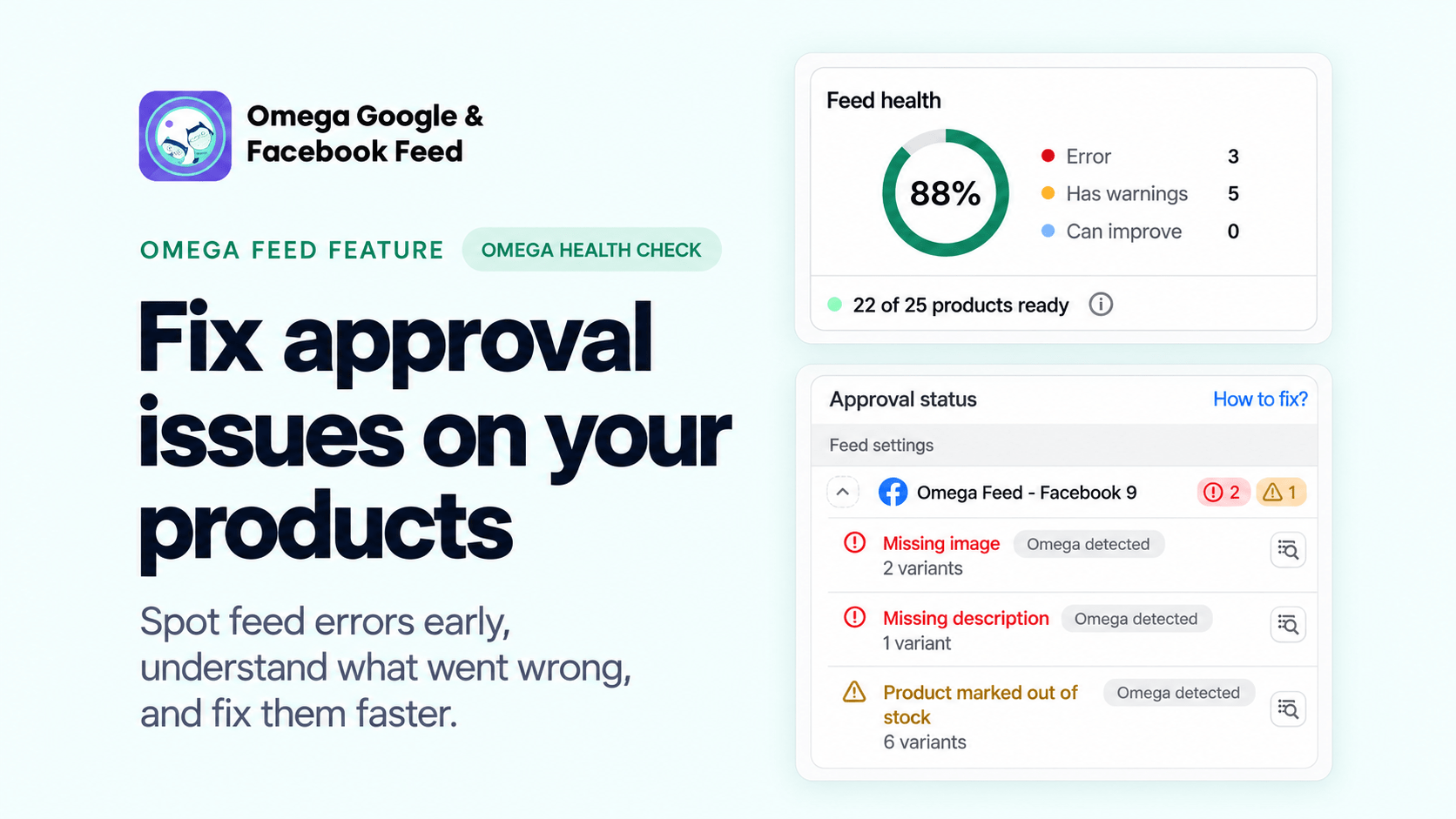
Fix Shopify Product Feed Errors Before You Submit
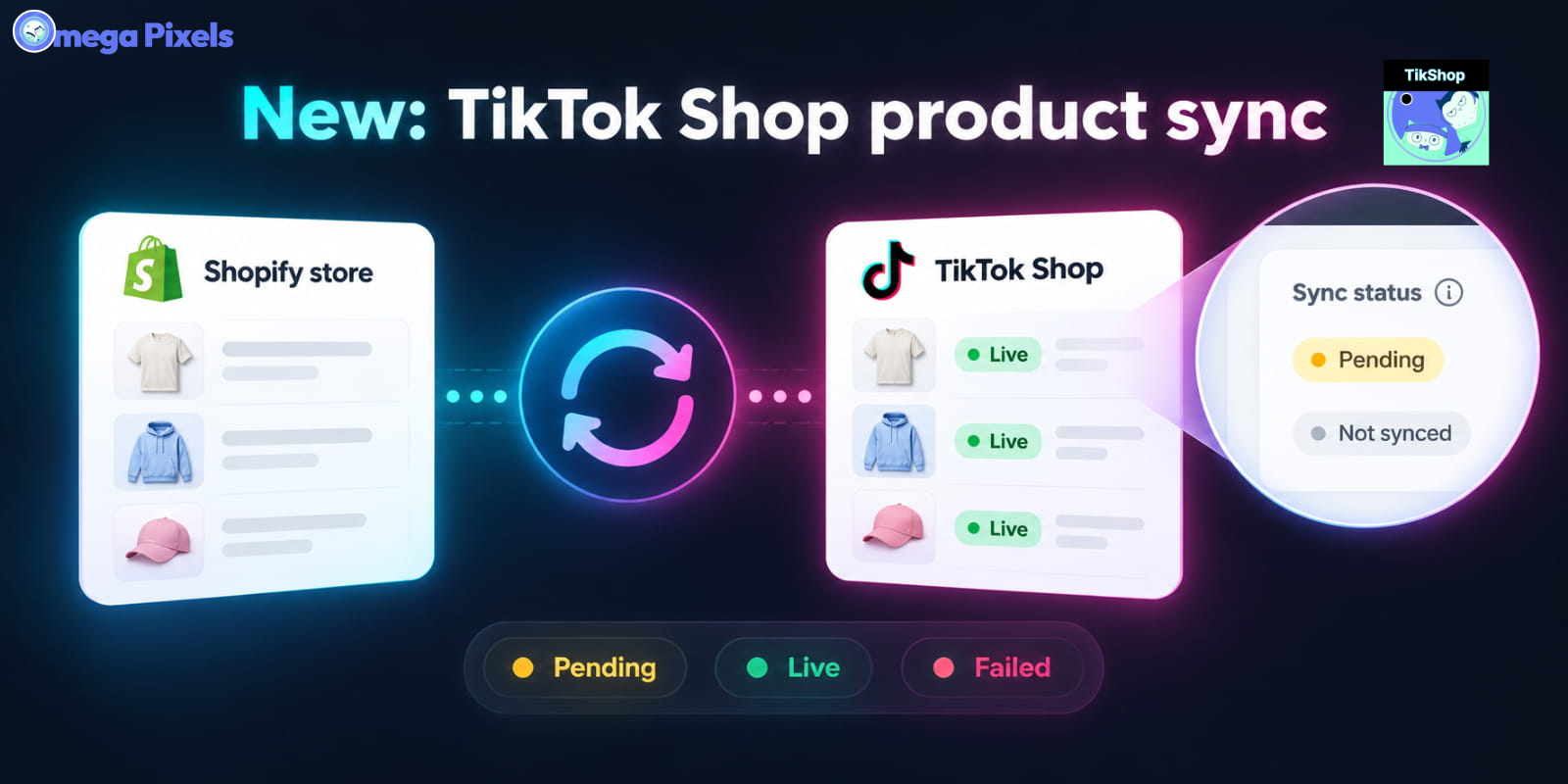
Sync Shopify Products to TikTok Shop directly with Omega TikTok Pixels
Transform Wix Storefronts with Shoppable Instagram Galleries: Omega Instagram Feed Launch
Omega Facebook Pixels Catches Catalog and Pixel Mismatches Before Your Match Rate Drops
Google Performance Max: A complete guide to setup, optimization, and reporting
Fix Shopify Product Feed Errors Before You Submit
Sync Shopify Products to TikTok Shop directly with Omega TikTok Pixels