Stop Bots From Training Your Meta Ads: Introducing Bot & Fraud Protection


Not every visitor landing on your Shopify store is a real customer ready to buy. Automated scrapers, search engine crawlers, and fraudulent bots browse your product catalog and can even trigger fake orders. Because standard tracking scripts cannot tell the difference between humans and scripts on their own, those non-human visits fire the exact same tracking events as genuine shoppers.
When corrupted event data flows into Meta, your entire ad engine suffers. Your reporting metrics become artificially inflated with phantom Page view and View content triggers, and even worse - fake purchases with bogus values teach Meta’s machine-learning algorithm the wrong buying signals. To keep your pixel data reliable and protect your marketing spend from optimizing toward bots, we launched Bot & Fraud Protection directly inside Omega Facebook Pixels.

How Bot & Fraud Protection Filters Crawlers and Fake Orders
Omega safeguards your tracking through a two-layer defense architecture designed to filter harmless scrapers quietly in the background while intercepting suspicious behavior before it reaches Meta.
Layer 1: Verified Bot Filtering (Automatic & Always Active)
Search engines and platform bots visit your storefront constantly - Google indexing catalog pages, social apps rendering rich link previews, or AI engines like ChatGPT scanning web text. Verified bot filtering recognizes automated visitors that identify themselves as crawlers and excludes them immediately. It requires zero configuration, stays on by default, and never interferes with genuine shoppers.
Layer 2: Suspicious Bot Blocking (One-Click Activation)
This layer intercepts traffic that mimics shoppers but exhibits abnormal or fraudulent patterns. Instead of letting low-trust actions trigger conversion events in Meta, Omega holds them back safely so your ad budget targets verified purchase intent.
Granular Event Inspection & "Need Review" Alerts
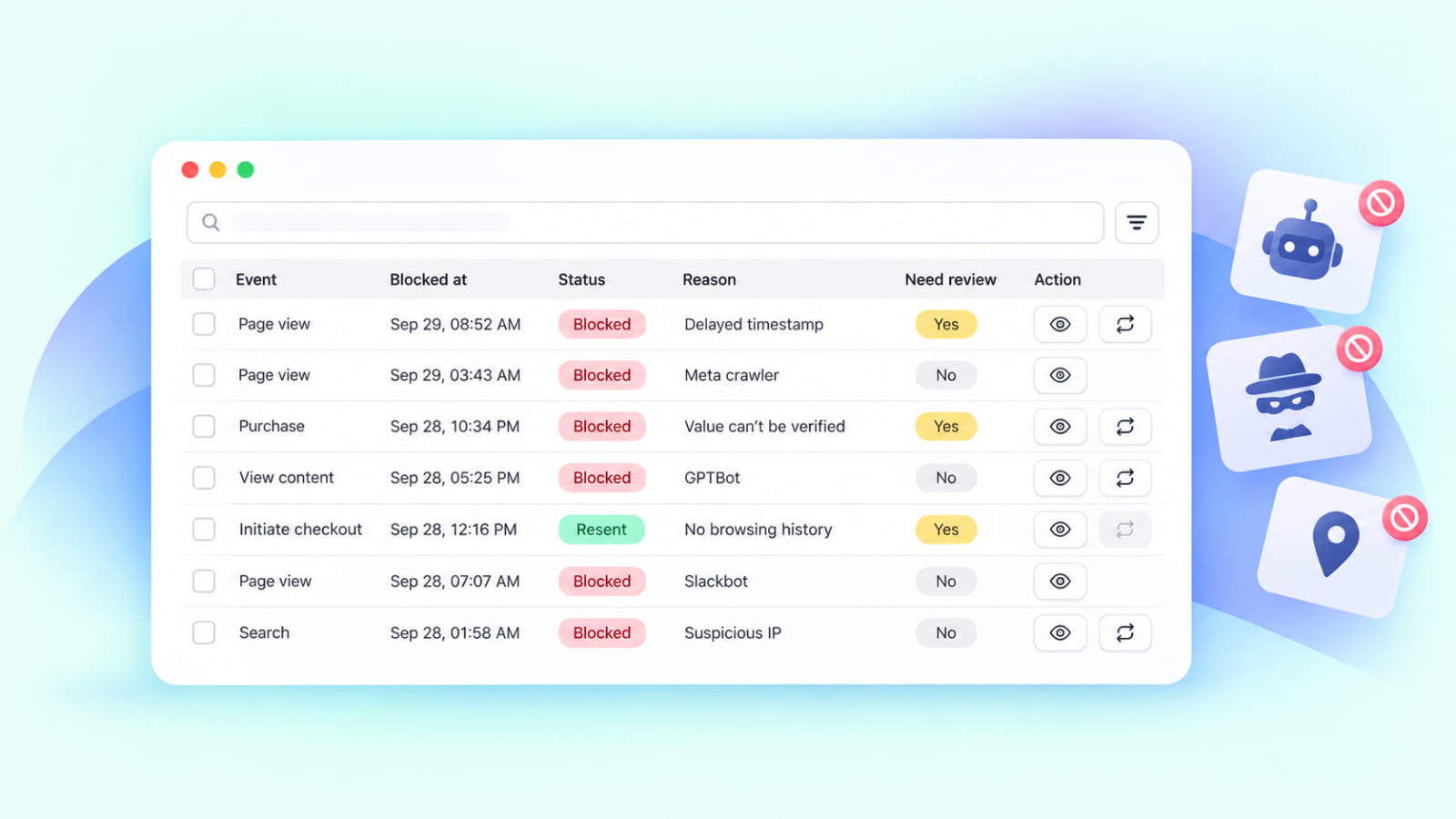
You retain complete visibility over every held event. Inside your dashboard, Omega displays exactly why an action was paused (such as delayed timestamps, bot signatures, or unverified order values), flags items in a dedicated Need review column that warrant a second look, and provides technical forensics: page URL, IP address, country, device profile, Meta cookie, and the linked Shopify order ID.
Merchant Control with Direct Event Resending
Automation should never lock you out of your data. If you inspect a held event and confirm that it was a legitimate buyer whose order was paused by mistake, you can instantly resend the event to Meta with a single click.
Why Clean Pixel Data Matters for Meta Ad Delivery and Budget Efficiency
Meta’s ad delivery algorithms rely entirely on the quality of the signals sent from your store. When your pixel data is clean, ad spend works significantly harder for your business.
Eliminates Traffic Metric Inflation
When crawlers trigger top-of-funnel events like Page view and View content, your store reports show higher traffic numbers than what actually exists. Filtering these automated hits restores accurate baseline conversion rates and gives you reports you can trust when evaluating marketing ROI.
Prevents Misguided Ad Budget Optimization
Meta uses downstream events - especially Initiate checkout and Purchase- to build lookalike models and locate high-intent shoppers. If fake orders or suspicious scripts fire conversion events with arbitrary values, Meta optimizes toward profiles that look like bots rather than paying customers. Blocking those signals stops ad spend drift and keeps campaign optimization focused strictly on real buyers.
How to Set Up and Manage Bot Protection in Omega Facebook Pixels
- Turn on Suspicious bot blocking: In Omega Facebook Pixels, go to Settings > Bot & Fraud Protection and switch on Suspicious bot blocking. (Verified bot filtering is already active by default.)
- Check held events: Go to Tracking analytics > Bot & fraud to see intercepted events, hold reasons, and items flagged under Need review.
- Review and resend: Click Details next to any event to check its IP, device, and linked Shopify order. If it is a real customer, click Resend to send it straight to Meta.
Keep Your Meta Ads Focused on Real Customers
Do not let scrapers and fake orders dictate where your ad budget goes. Open Omega Facebook Pixels in your Shopify admin today and turn on Suspicious bot blocking to protect your tracking signals and optimize your ad spend on real shoppers.

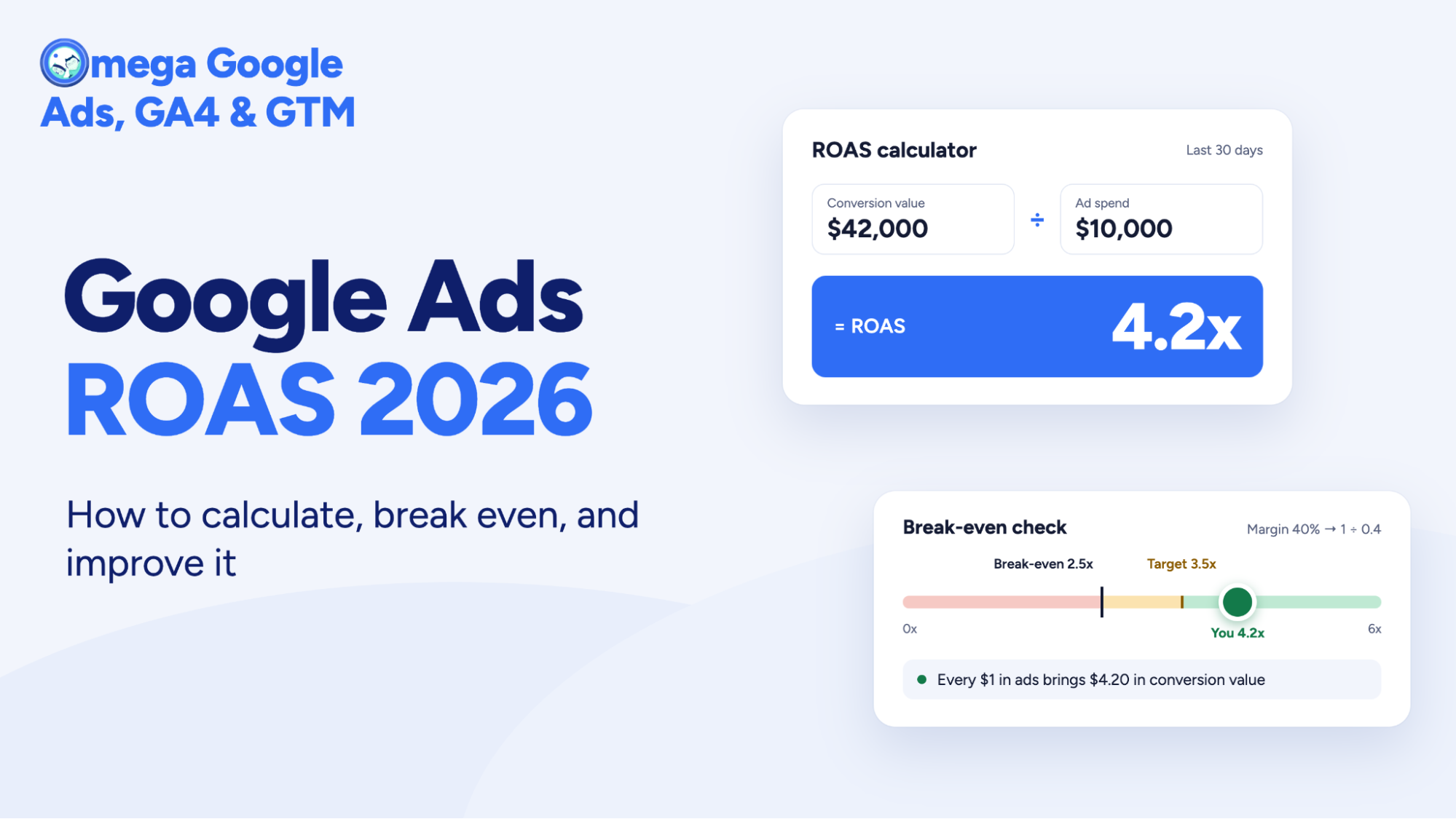
Google Ads ROAS 2026: How to calculate, break even, and improve it
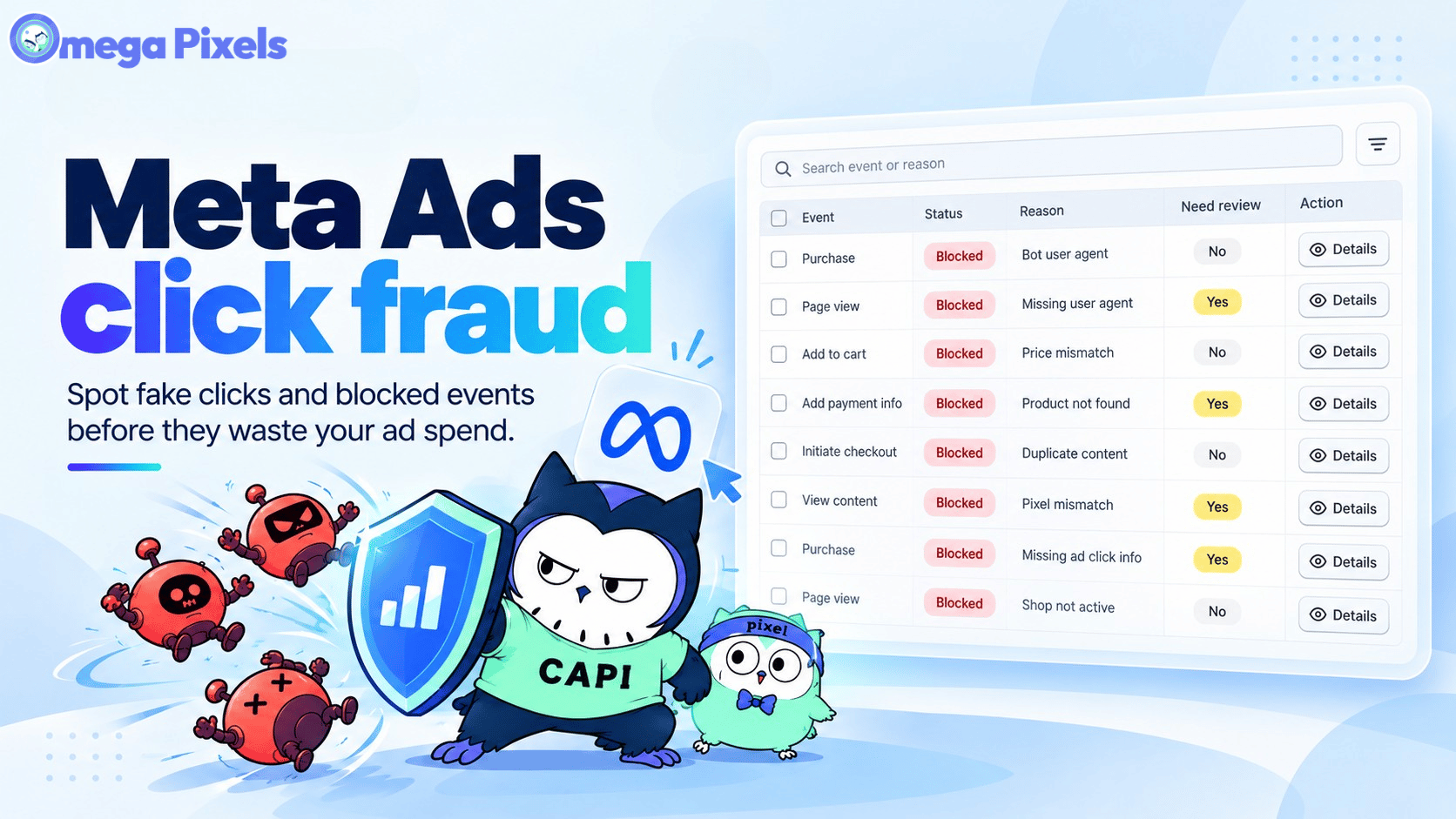
Meta Ads Click Fraud: How Bots Drain Your Budget and Poison Your Pixel (2026 Guide)
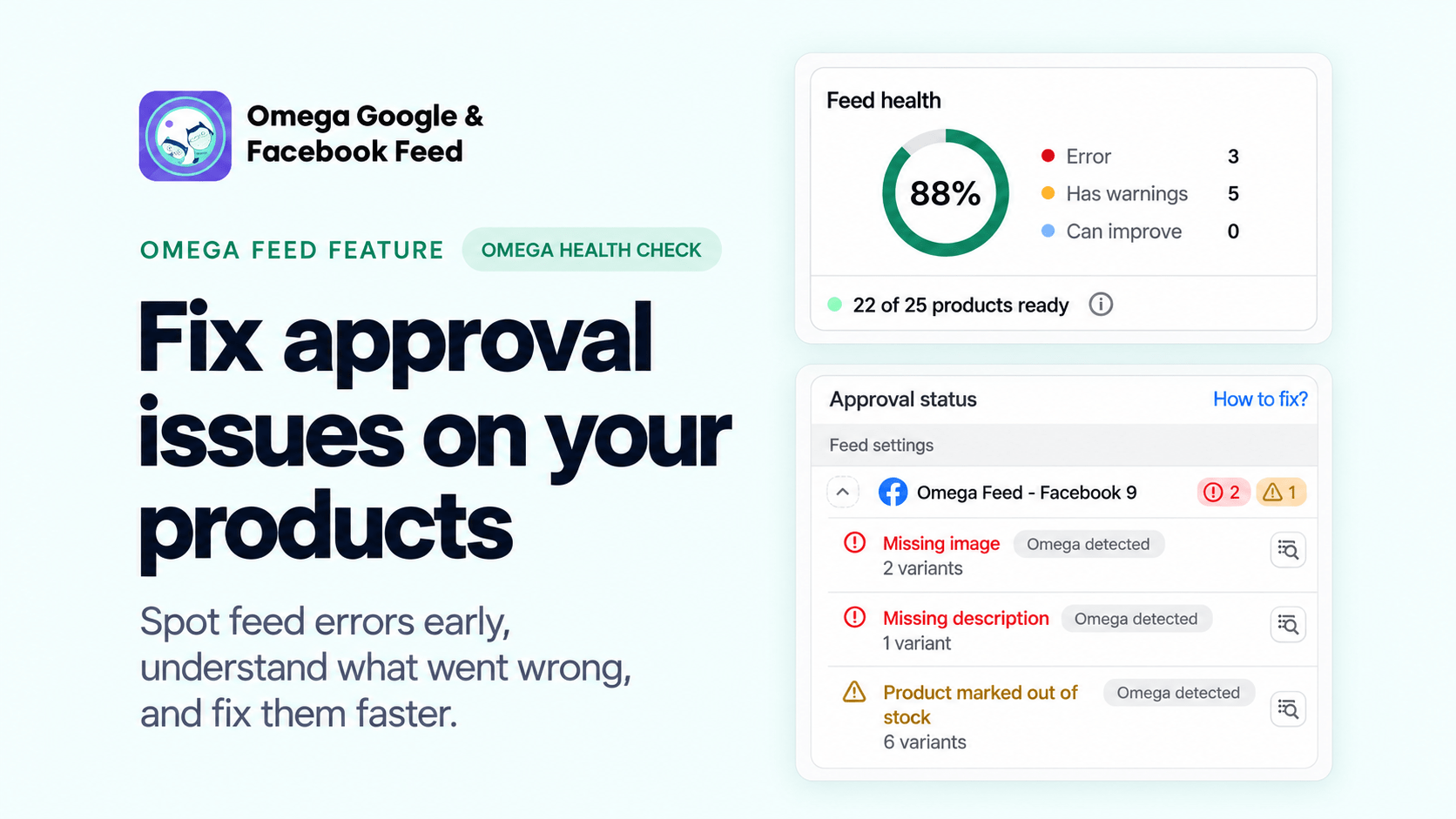
Fix Shopify Product Feed Errors Before You Submit
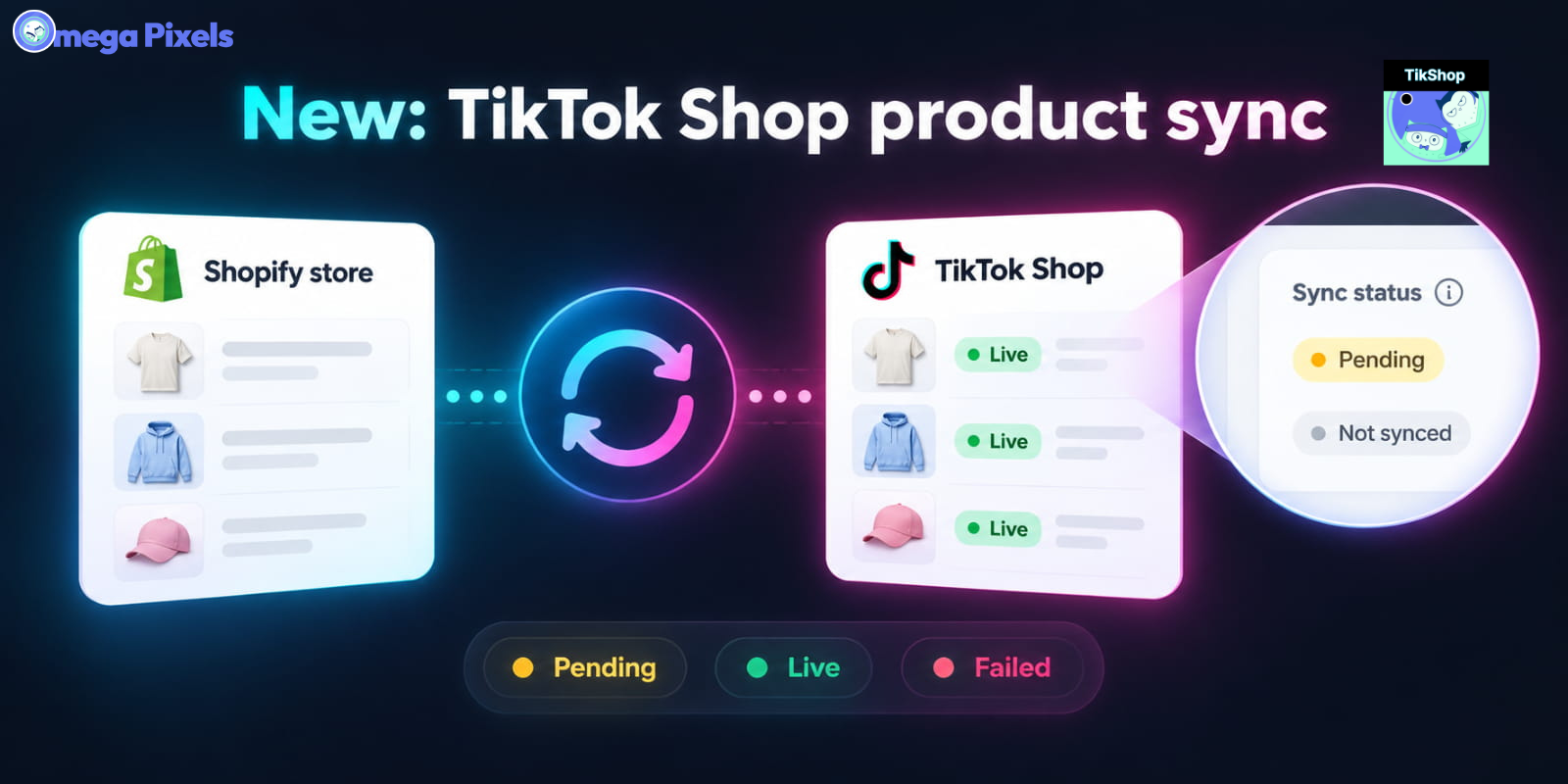
Sync Shopify Products to TikTok Shop directly with Omega TikTok Pixels
Fix Shopify Product Feed Errors Before You Submit
Sync Shopify Products to TikTok Shop directly with Omega TikTok Pixels
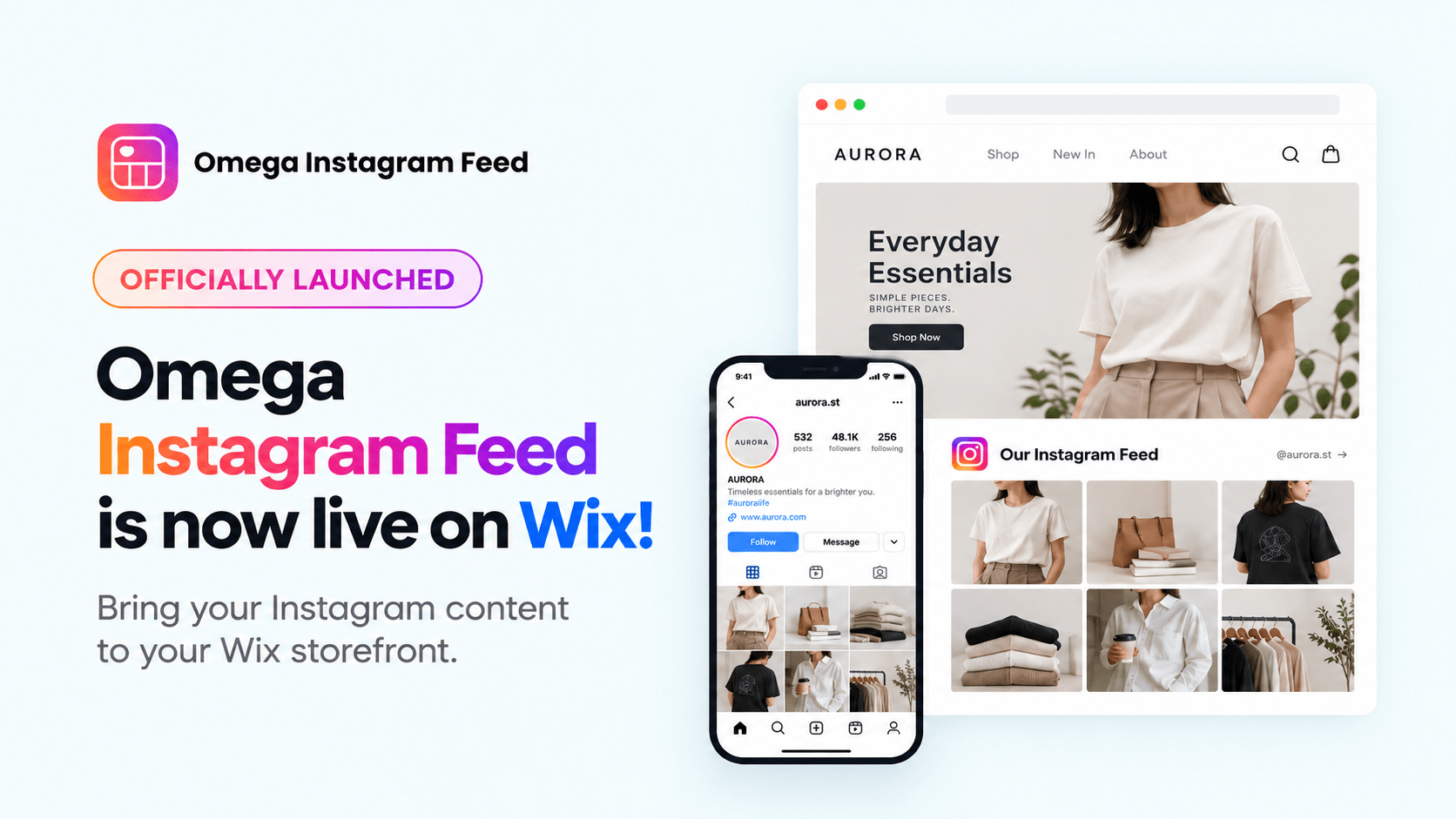
Transform Wix Storefronts with Shoppable Instagram Galleries: Omega Instagram Feed Launch
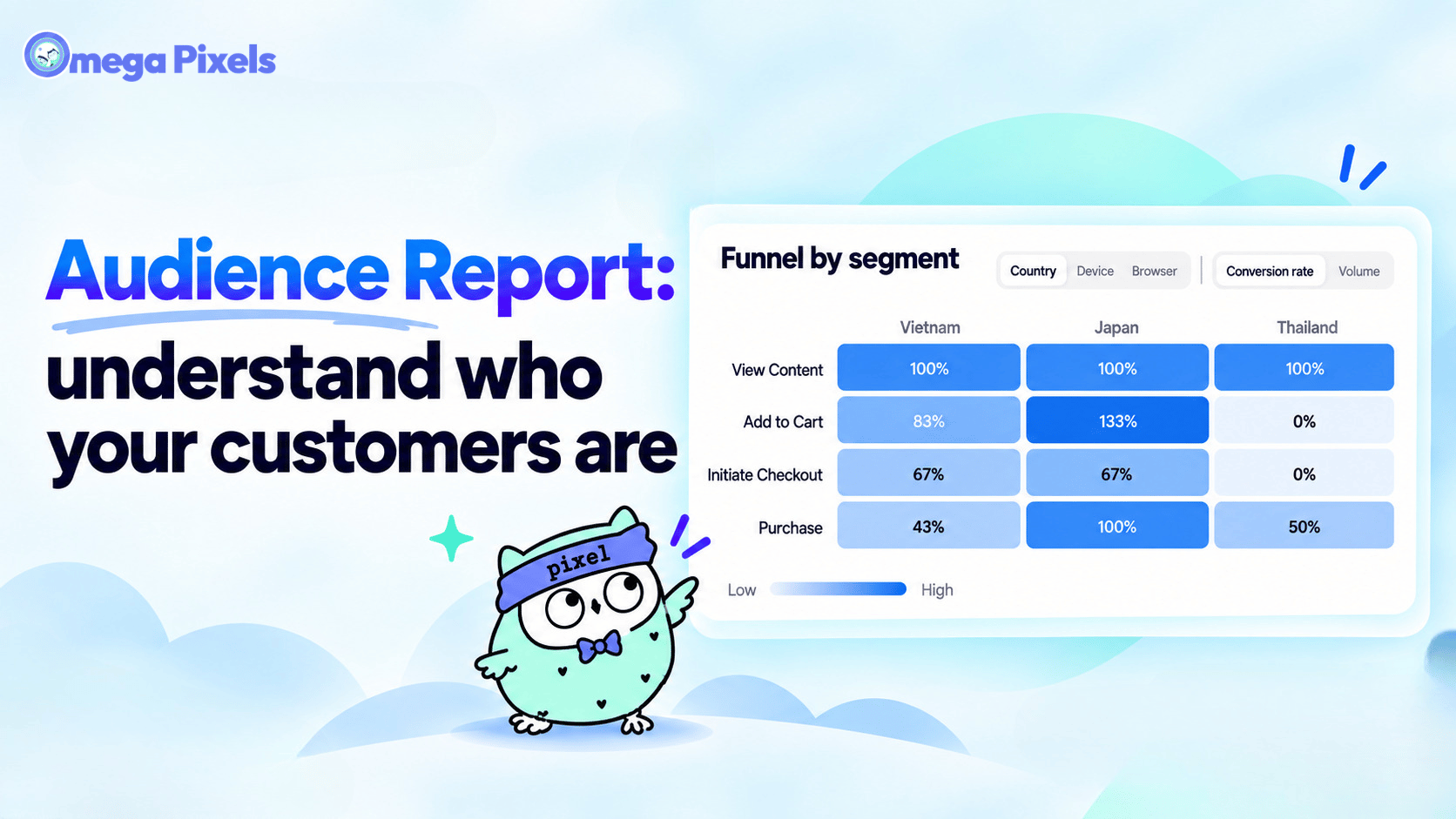
New in Omega Facebook Pixel: Audience Report
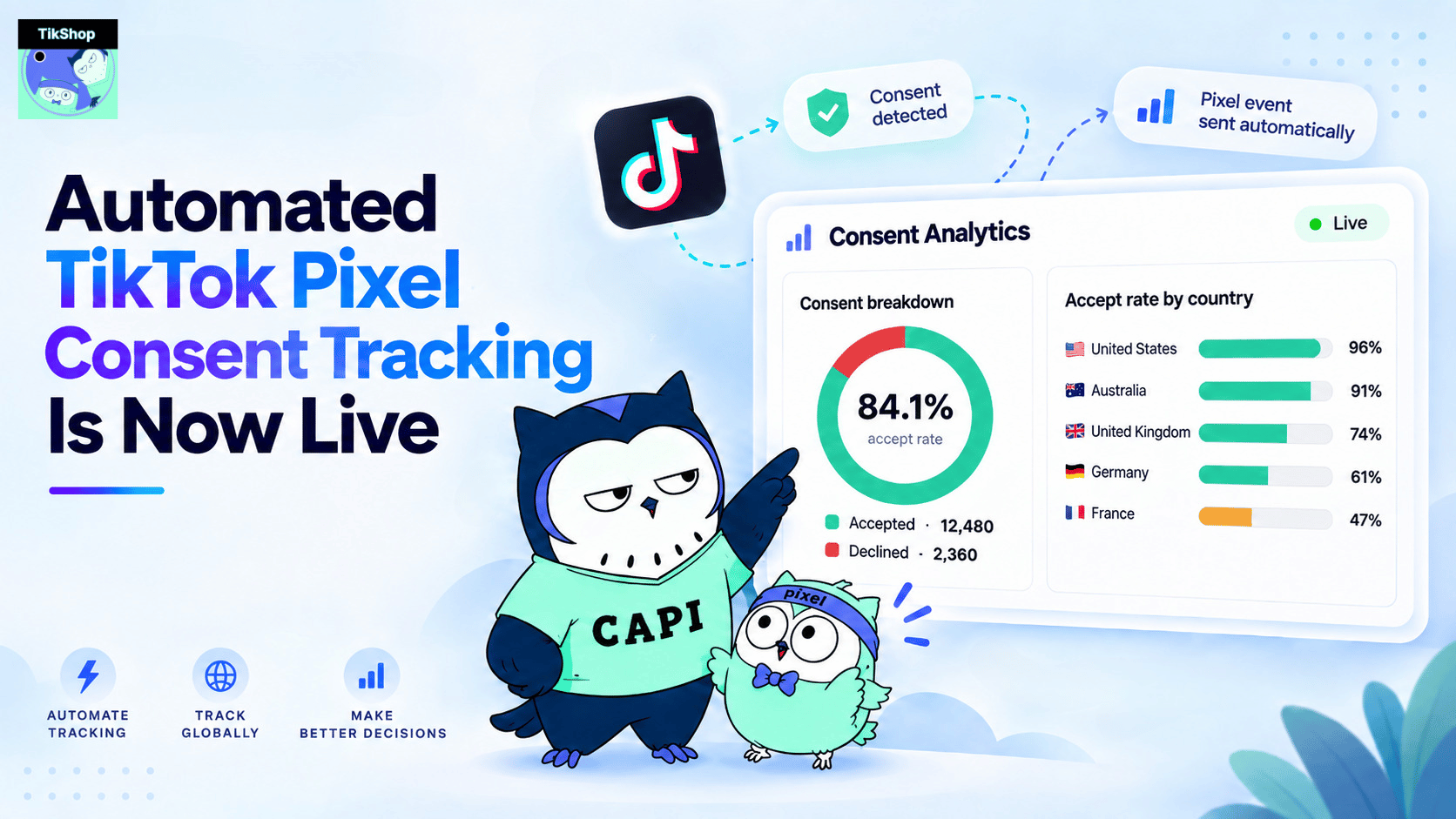
Automated TikTok Pixel Consent Tracking Is Now Live
Fix Shopify Product Feed Errors Before You Submit
Sync Shopify Products to TikTok Shop directly with Omega TikTok Pixels
Transform Wix Storefronts with Shoppable Instagram Galleries: Omega Instagram Feed Launch
New in Omega Facebook Pixel: Audience Report